Design the world.Let others play it.
Races, classes, spells, factions, bestiary, locations, lore and much more to build the world you want. Once you publish it, anyone can walk in and play it.
The process
How a world gets built
Define your world
Genre, magic level, danger level. 11 narrative tones, from epic fantasy to space opera.
Build it
By hand, or ask the AI over chat. Nothing enters your world without your approval first.
Publish it
It translates itself into all four languages and shows up in the public catalogue. Or you keep it private, your call.
What you can create
Here’s what you get to define
From races down to loot tables. If it’s in your head, it fits in here.
Races and classes
- Attributes, size, speed and starting racial spells
- 14 class mechanics: rage, shapeshifting, oaths, runic summoning and more
- Talent-tree style specializations, with their own spells per level
- Combat role per class: tank, healer, support, damage
Magic and items
- Spells that cost mana. Or life.
- Schools of magic with their own name and tongue
- 35 item types, from common to mythic
The world
- Factions with alignment, goals and a leader
- A bestiary with threat tier, resistances and loot tables
- Locations with secrets only the DM knows
Characters
- NPCs with hidden backstory, motivations, quirks and relationships between them
- They can become playable characters
- Custom opening scenes: nobody gets a generic intro in your world
AI-generated
- A chat that creates races, classes, spells, items, monsters or factions: whatever you ask for
- You review it before it lands: race by race, NPC by NPC
- Portraits and artwork for every race, NPC, item or monster
- Import spells and items from existing templates, without starting from scratch
Publish and share
- Automatic translation into all four languages, included on paid plans
- Free cover image generated on publish
- Public catalog with ratings from other players
- Anyone can clone your published world
Trama Editor
A world with no adventures is just scenery
You drag the scenes, connect them, and decide what happens based on what the party does.
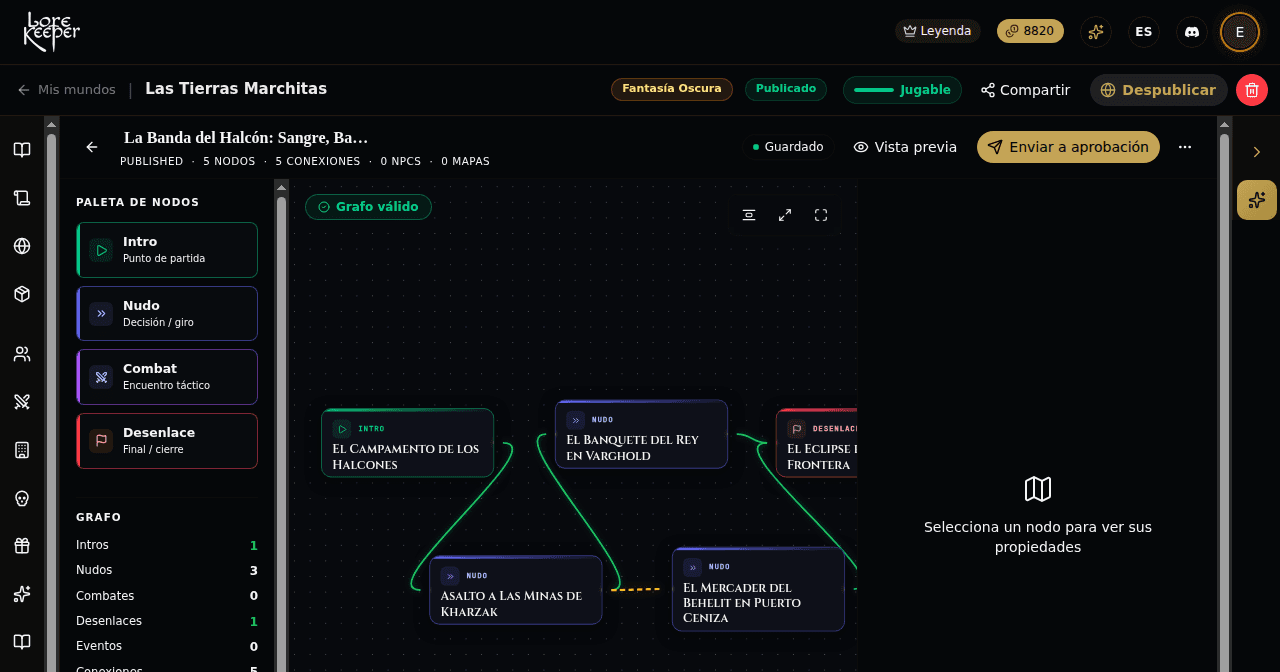
Four node types
Intro, Node, Combat and Ending. You connect them by dragging a line between them.
Connections carry conditions
"If they talked to this NPC", "if they entered this location". Set with a visual builder, no code required.
Build it by hand or by chat
Describe it and the AI assembles the whole thing. Or you build it yourself, scene by scene.
Configurable combat
Enemies from your own bestiary or from 15 base archetypes, with gold, XP and item rewards by rarity.
You can't publish just anything
Before it goes live, the system checks the whole thing is playable start to finish, with no dead ends.
Played in a group
Forks are a group decision: safe path versus risky path. Each player brings their own character or adopts one you designed.
Frequently asked questions
It is an editor where you define the rules of your own RPG world: races, classes with their own mechanics, spells, items, factions, a bestiary and branching adventures with combat. Once you publish it, anyone can step in and play inside it, with the AI game master treating your rules as canon. Building and publishing is free, with no limit on worlds.