

6 min read
An AI Dungeon Master With Grid Combat: Tactical Board Fights in LoreKeeper
Most AI Dungeon Masters fight in prose. You type “I attack the orc”, the AI tells you what happened, and you never see where anyone stands. LoreKeeper now has a second way to fight: a grid board where you move your own token and every turn follows initiative.
Free · 10 turns a day · no card
In this article
What is board combat in LoreKeeper?
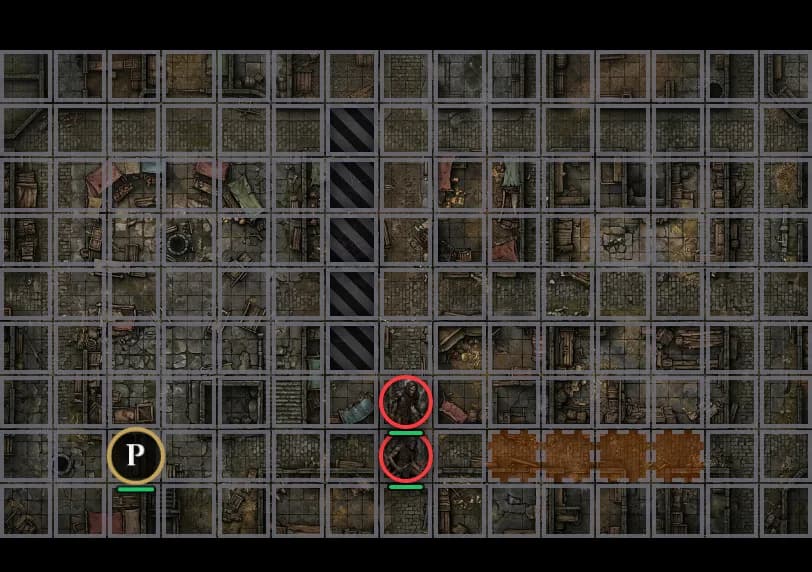
Board combat is a combat mode where the fight happens on a grid map. Your hero is a token. Each enemy is a token. Walls block movement and difficult terrain slows you down. When combat starts, the AI Dungeon Master sets the scene, the engine rolls initiative, and the fight plays out turn by turn on the board.
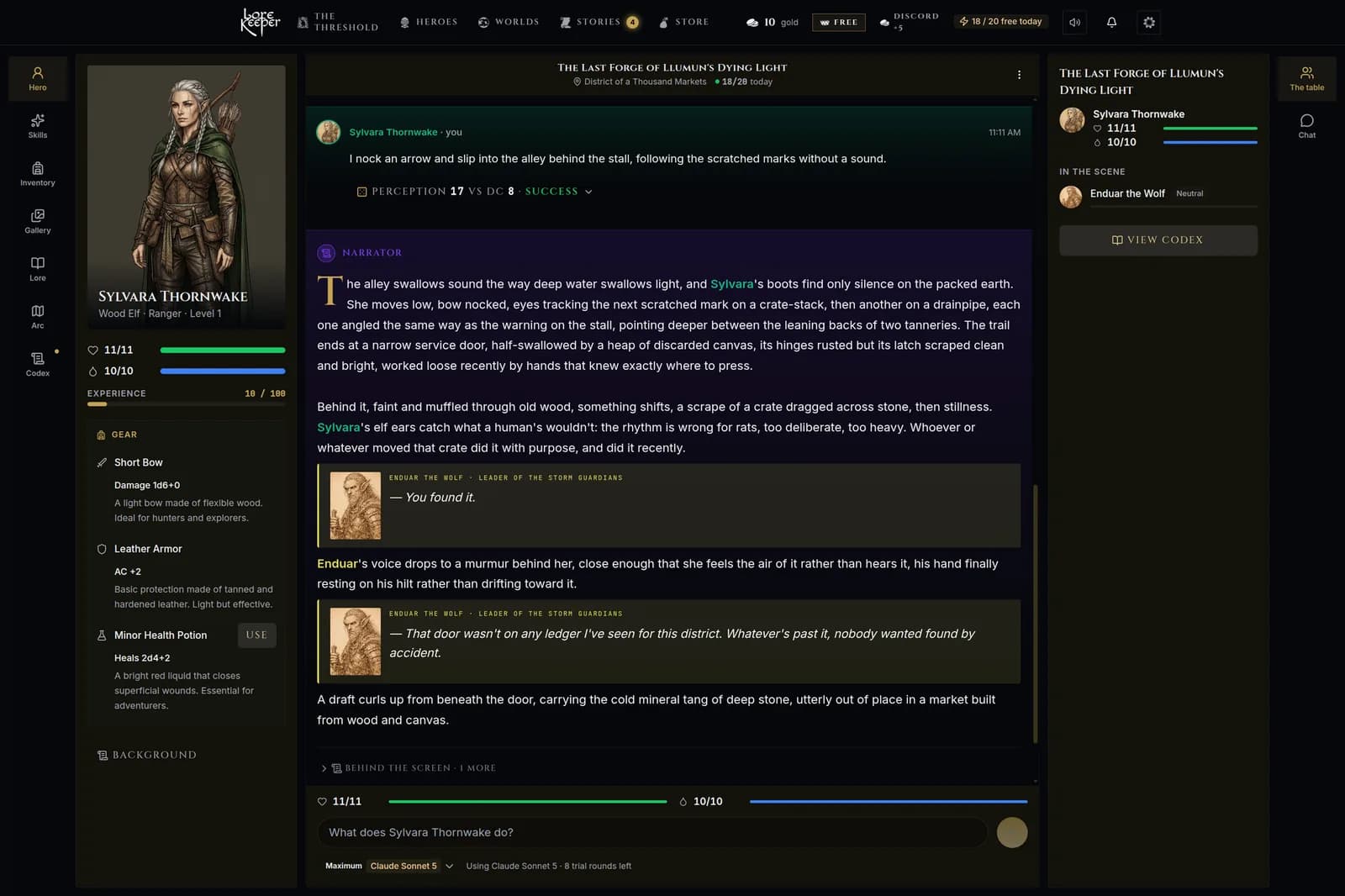
The story does not stop for the fight. The same AI Dungeon Master that runs your campaign narrates every exchange, and when the last enemy falls you are back in the story with the wounds, loot and consequences the fight left behind.
What is the difference between narrated and board combat?
LoreKeeper keeps both modes because they suit different players and different nights.
| Narrated | On a board | |
|---|---|---|
| What you do | Write what your hero does | Move your token and pick an action |
| Turn order | Everyone acts at once each round | One by one, in initiative order |
| Map | None, positions live in the narration | Grid with walls and difficult terrain |
| Dice | Rolled by the engine | Rolled by the engine |
| Pace | Quick fights | Longer, more tactical fights |
Pick narrated if you play on your phone between other things and want the story to keep moving. Pick the board if you miss the battle map of a real table and want positioning to matter.
How does a turn work on the board?
- The campaign owner sets the field. Before the first round, the owner places walls and difficult terrain on the grid.
- The engine rolls initiative. Turn order comes from the dice, not from the AI.
- On your turn, you move. Move your token square by square. Walls stop you and difficult terrain costs more movement.
- Then you act. Attack, defend, or use an item.
- The engine resolves, the AI narrates. The roll, the damage and the result are computed first. Then the Dungeon Master describes the blow.
Enemies take their turns the same way: they move on the same grid and roll against your armor class with the same rules.
Why do the dice decide and not the AI?
A language model is a good storyteller and a bad referee. If the AI decides who hits, fights bend toward whatever makes a nice paragraph, and you stop trusting the result. That is the main reason people leave ChatGPT as a Dungeon Master.
LoreKeeper keeps the two jobs apart. The rules engine owns the numbers: attack rolls against armor class, damage from weapon dice and modifiers, conditions. The AI owns the words. On the board this is easy to see, because the result of each roll appears on screen before the narration starts.
How do you try board combat?
- Create a free account. The free tier gives you 10 turns a day, no credit card.
- Start a new adventure in Mokgard and choose Freedom mode.
- Under Fights, choose On a board. You can switch back later in the campaign settings.
- Play until the first fight starts. The board opens on its own.
Board combat is open in the six official worlds. Community worlds keep narrated combat for now and do not show the option. If you want fights against other players instead, see the LoreKeeper Arena.
Frequently asked questions
Is there an AI Dungeon Master with grid combat?
Yes. LoreKeeper lets you fight on a grid board with an AI Dungeon Master. You move your token square by square, every combatant acts in initiative order, and the dice are rolled by the rules engine before the AI narrates the result. Board combat is available today in the six official worlds, Mokgard included; community worlds use narrated combat.
How do I turn on tactical board combat in LoreKeeper?
Start a new adventure in Mokgard, or in any of the six official worlds, and pick Freedom mode. Before you launch, the Fights option offers two choices: Narrated or On a board. Choose On a board. You can change it later in the campaign settings.
What is the difference between narrated combat and board combat?
In narrated combat you write what your hero does, the dice roll, and the DM narrates every blow. Everyone acts at once each round, so fights are quick. In board combat you move a token on a grid map with walls and difficult terrain, pick an action (attack, defend or use an item) and act on your turn in initiative order. Fights are longer and more tactical.
Does the AI decide who hits in board combat?
No. The rules engine rolls the dice and applies the results: an attack roll against armor class, damage from the weapon dice, and conditions. The AI only narrates what the engine resolved. It cannot change a hit into a miss to make the story more dramatic.
Is board combat free to try?
Yes. LoreKeeper has a permanent free tier of 10 daily turns with no credit card, and Mokgard is the quick-start world. You can create a hero and start a board-combat campaign from the free tier.
Which worlds have board combat?
Board combat is open in the six official worlds: every class there starts with a role and spells the grid can play. Community worlds keep narrated combat for now and do not show the option.
Your table is ready
Create a character, pick a world and play your first scene in a few minutes. The AI Dungeon Master handles the rules, the dice and every NPC.
Free · 10 turns a day · no card
We’re saving you a seat
Still deciding? Come ask anything on our Discord. The team and other players answer.
Ask on DiscordRelated guides
Living Wiki: A Codex That Writes Itself
A self-updating wiki of every NPC, location and event your sessions create.
AI DM Wiki Tools Compared: LoreKeeper Codex vs Self-Hosted LLM Wikis
Self-hosted LLM wiki scripts vs auto-compile inside the play loop — workflow, latency, privacy and cost compared.
AI Dungeon Master Multiplayer
Real-time multiplayer with an AI Game Master — how groups join and play together.